
The event industry has changed dramatically in recent years. Clients no longer rely only on recommendations they search online. Whether it’s a corporate conference, wedding, or private gathering, people turn to Google first to find reliable event planners.
If your website doesn’t appear on the first page, potential clients will likely book with competitors. SEO helps bridge that gap by improving your visibility, building authority, and attracting clients who are already searching for your services.
- Reach clients planning events in your city or region.
- Build a credible brand presence in local search results.
- Generate consistent inquiries and bookings organically.
Common SEO Challenges for Event Planners
Event planners face unique challenges online. The competition is not just local it’s also with agencies that have strong portfolios, social proof, and well-optimized websites.
- Competing with high-budget agencies and marketplaces.
- Low visibility in local Google searches.
- Weak or outdated website optimization.
Benefits of SEO for Event Planners
From my experience working with service-based businesses, SEO is one of the most effective ways for event planners to grow sustainably. It not only drives traffic but also builds trust and authority.
- Improve online presence for event planning keywords.
- Get qualified leads who are ready to book services.
- Reduce reliance on paid ads while maintaining steady growth.
Key SEO Strategies for Event Planners
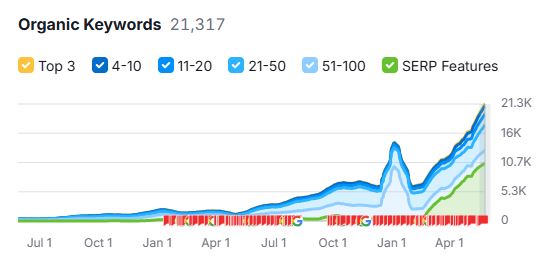
Local SEO and Google Maps Optimization
When people look for event planners, they usually search by location. Appearing in Google Maps and local packs is critical to earning those leads.
- Optimize your Google Business Profile with correct contact details, photos, and business hours.
- Use local keywords like “event planner in New York” or “wedding organizer in Los Angeles.”
- Encourage clients to leave positive reviews after successful events.
Keyword Research for Event Niches
Event planning covers many niches, such as weddings, corporate functions, private events, and more. Each requires specific keyword targeting. Tools like SEMrush and Ahrefs can help find valuable, untapped search terms.
- Target phrases like “affordable wedding planner” or “corporate event management services.”
- Use long-tail keywords with location modifiers.
- Optimize for voice search by using conversational phrases like “who is the best event planner near me.”
Create Service-Specific Pages
Each event category should have a dedicated, optimized landing page. This improves user experience and helps Google understand your expertise.
- Create separate pages for weddings, corporate events, and private parties.
- Add client testimonials, photo galleries, and CTAs like “Book Your Event Consultation.”
- Internally link to your SEO services in USA page for relevance and structure.
Blogging and Content Marketing
Publishing helpful blogs can establish your event business as an expert resource. According to Search Engine Journal, educational content remains one of the top ways to build trust and improve rankings.
- Write guides like “Top 10 Event Planning Trends.”
- Publish blogs that answer client questions like “How to Choose the Right Venue for a Corporate Event.”
- Reference research-backed insights from Backlinko and Moz.
Visual SEO and Gallery Optimization
Images play a major role in the event planning industry. Optimizing your photos and videos can improve your rankings in image search and attract visual-first clients.
- Use descriptive filenames and alt text for all images.
- Create high-quality before-and-after event galleries.
- Optimize image size for faster page loading.
Review and Reputation Management
Positive reviews are essential for event planners. They not only influence potential clients but also improve local SEO performance.
- Ask satisfied clients to leave testimonials and reviews.
- Respond professionally to both positive and negative feedback.
- Highlight your reviews on your homepage or service pages.
How Affordable SEO Helps Event Planners Compete
Affordable SEO helps small and independent event planners compete with big agencies. By building local authority and using the right keywords, you can reach people actively searching for your services without spending heavily on ads.
- Generate quality leads at a lower cost.
- Establish credibility and brand recognition.
- Build a strong online presence in your local area.
Conclusion
In today’s digital-first market, visibility is everything for event planners. SEO ensures that when people search for trusted professionals, your business stands out at the top of Google results.
By investing in an affordable seo services company, you can drive consistent leads, strengthen your brand presence, and grow your client base all without overspending.
Ready to book more clients and grow your event business
Our Affordable SEO Services help event planners increase visibility, generate leads, and boost bookings with data-driven strategies.
Get Now

Start today with our SEO services in USA and make sure clients find you first when they search for event planners in your city.
FAQ’s
Q1. Why do event planners need SEO?
Because most clients start their search online. SEO helps your event planning business appear when they’re actively looking to book services.
Q2. How long does SEO take for event planners?
Most event businesses begin to see improvement in 3-4 months, with major ranking results within 6-12 months.
Q3. Can small or independent event planners compete with large agencies using SEO?
Yes. With local SEO, niche targeting, and consistent optimization, even small event planners can outrank larger competitors.
Q4. What kind of content helps event planners rank?
Blog posts, service pages, testimonials, and photo galleries all strengthen your site’s topical authority.
Q5. Does SEO also help for destination event planners?
Absolutely. Optimized content and location-based keywords can help attract clients planning events in your target destination cities.

Farman Ali is an experienced SEO Specialist with more than 6 years of expertise in helping businesses grow their online presence, improve search visibility, and enhance their AI visibility across digital platforms to achieve sustainable growth.
He started his career as an SEO intern at an IT company, where he learned the fundamentals of SEO, keyword research, and website optimization. His passion for digital growth led him to work at a digital marketing agency, where he managed multiple client projects from different industries. There he developed strong skills in technical SEO, on page optimization, content strategy, and AI based visibility, consistently delivering measurable improvements in search performance.
Over the years, Farman has worked with international brands and led successful SEO campaigns that increased organic traffic, improved keyword rankings, and boosted conversions. His expertise covers modern SEO practices including SXO (Search Experience Optimization), AEO (Answer Engine Optimization), and GEO (Generative Engine Optimization). These skills allow him to help brands perform effectively across traditional search, voice search, and AI powered search environments.
Farman’s core strengths include technical SEO audits, AI enhanced visibility strategies, SXO improvement, keyword mapping, and data analysis using tools such as Google Analytics, Google Search Console, SEMrush, Ahrefs, and Screaming Frog. He also specializes in creating content strategies aligned with user intent and search behavior, ensuring that websites not only attract traffic but also convert visitors into loyal customers.
He keeps himself updated with the latest Google algorithm changes, AI advancements, and SEO innovations to ensure that every strategy remains effective and future focused.
Farman believes that SEO is more than just rankings. It is about building trust, visibility, and consistent growth for brands across all digital platforms. His mission is to help businesses strengthen their online presence, gain authority in their niche, and achieve long term success through smart SEO, SXO, AEO, and GEO strategies that align with the future of digital search.